Summary:
Fast lead response strongly influences conversion, but relying entirely on manual follow-up becomes difficult as inquiries grow. Automation can handle instant replies, routine questions, reminders, and consistent outreach around the clock, while human teams remain essential for complex, sensitive, or high-value conversations. The most effective strategy combines automation’s speed with human judgment.
Table of Contents
Research from Harvard Business Review, based on an analysis of 2.24 million sales leads, found that companies that responded to leads within five minutes converted more than those that responded later. This highlights a simple reality: the longer you take to respond, the lower your chances of converting a lead.
But can businesses realistically respond to every customer within five minutes, every time? For human teams, maintaining such a quick response time can be challenging, especially when multiple leads arrive simultaneously. This is where dedicated lead follow up software comes in. This is where automated follow-ups come in. Automated workflows can respond almost instantly, helping businesses make the most of the crucial five-minute window.
However, speed is only one part of effective lead follow-up. Accuracy and relevance matter just as much. How reliable are the automated workflows generating the responses?
Automation works well for common queries, sharing basic information, and sending routine follow-ups. However, it may not be enough when a lead asks a complex question or wants a detailed, personalised conversation. That is where human intervention becomes essential.
So, should businesses rely on automation or let their sales teams handle every conversation manually? The answer lies in finding the right balance. This guide explores both approaches to help you understand when to automate, when to involve your team, and how to build an effective follow-up strategy.
Why Does the First Few Minutes Matter?
When someone reaches out to your business, they are almost always comparing you with at least one other option. Speed is not a nice-to-have in that moment; it is often the deciding factor.
Research found that leads contacted within the first five minutes of submitting an inquiry are up to 100 times more likely to convert compared to those contacted after 30 minutes. Most businesses relying on staff to manually follow up are realistically responding in hours, not minutes, so a large share of interested leads are cooling off before anyone even replies.
The financial impact adds up quickly. If your business generates 100 leads a month and loses even 20 percent to slow follow-up, that is 20 customers walking straight to a competitor every month. For a growing crm for small business, that is a steady drain on revenue that is easy to miss because it never shows up as one dramatic loss.
The Challenges of Manual Follow-Up
Manual follow-up works fine when lead volume is low, and your team has time to stay on top of every inquiry. The trouble is that this rarely holds once a business starts to grow.
Staff get busy, priorities shift, and follow-ups start slipping. Sales reps face fatigue during high-volume periods. Time zones create gaps where leads submit inquiries at hours nobody is working, and weekends often go uncovered entirely. Human error means some leads get several thoughtful follow-up attempts while others get none at all. None of this happens because your team does not care. It happens because manual processes were never built to scale evenly.
Most sales data also shows conversions often happen after the fourth or fifth touchpoint, yet most manual sequences stop after one or two attempts. That gap between what actually converts leads and what teams can manage manually is where potential revenue disappears.
Scaling a manual process also means scaling headcount, which raises costs, adds training time, and introduces more room for things to slip. For most growing service businesses, that is not sustainable as lead volume increases.
The deeper issue is that manual follow-up usually relies on memory rather than a structured lead management system. A sales conversation ends with a plan to reconnect later, and without a scheduled reminder, that plan depends entirely on someone remembering it. Memory holds up fine at low volume, but as active leads grow, it becomes genuinely difficult to track every pending conversation, and missed follow-ups rarely get documented. So, the impact stays invisible until revenue leaks away.
How Automation Transforms Lead Follow-Up?
Automated follow-up removes the dependency on someone being available and remembering to act. Instead of waiting for a team member to notice a lead and find time to reply, crm automation removes the dependency on someone being available..
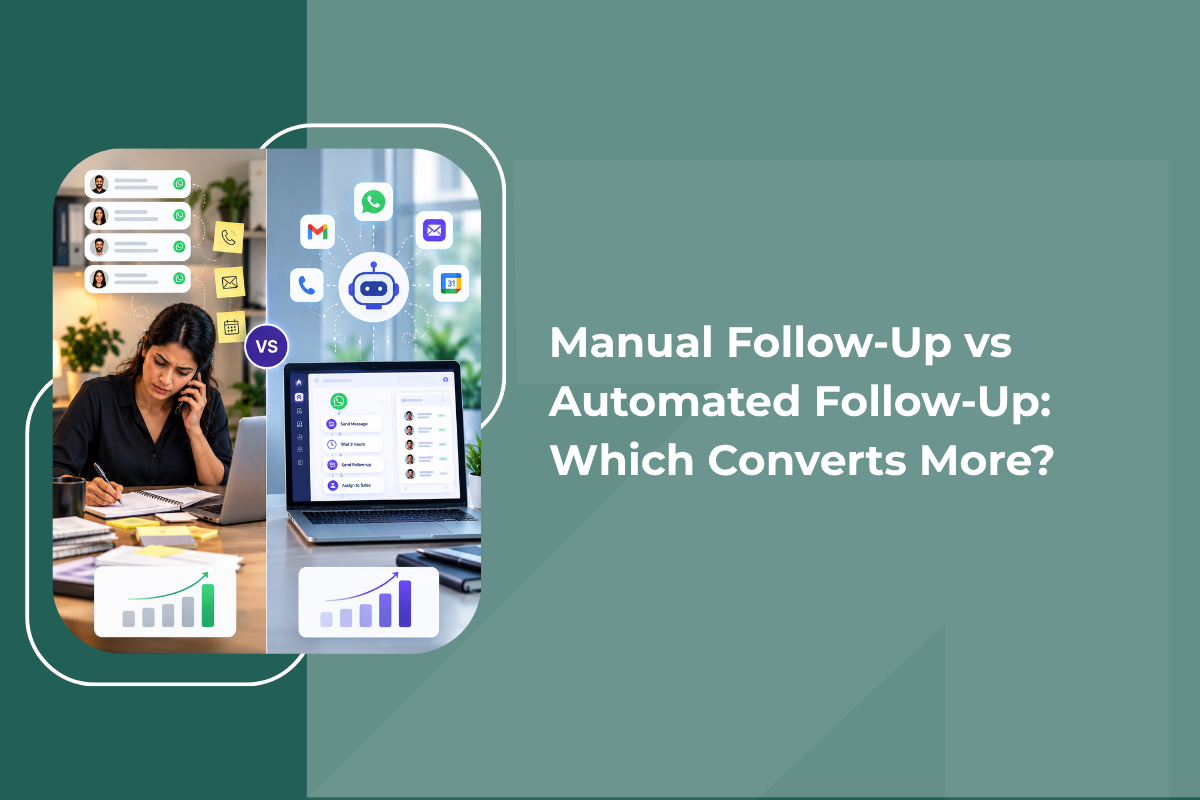
The advantages become clear once you compare the two side by side. Automated follow-up responds within seconds, while manual response time varies and is often measured in hours. Every lead gets the same structured outreach with automation, while manual outreach depends on which staff member picks it up and how busy they are.
Automated systems handle hundreds of leads at once without breaking a sweat, while manual capacity is limited by headcount. Automated follow-up runs around the clock at no extra cost, while after-hours coverage with a manual team usually means added staffing or missed leads.
This does not mean automation should feel robotic. Good automated follow-up communicates the way a helpful team member would, referencing the lead's specific inquiry rather than reading like a generic mass message. Done well, leads often cannot tell the difference between a thoughtful automated reply and one written by a person, except that the automated one arrived far faster.
Does Automation Replace the Human Touch Completely?
This is the question most business owners want answered, and the honest answer is no, not entirely. Automation suits the parts of follow-up that are repeatable and time-sensitive, like the first acknowledgement, a qualifying question, an appointment reminder, or a gentle nudge to a lead that has gone quiet.
Where a human still matters most is in conversations that need judgment, negotiating terms, handling a sensitive complaint, or closing a high-value deal where trust carries real weight. The most effective setup for most growing businesses is automated follow-up that handles speed and consistency, letting the team focus on conversations that genuinely need a human decision.
This blended approach also connects with how leads move through your pipeline. If you want to understand how leads are typically staged from first contact to close, our blog on what a lead funnel is and lead statuses is a useful companion read.
Which Businesses Feel the Difference Most?
Not every business feels slow follow-up equally, but a few patterns show up consistently. Businesses relying on inbound inquiries and time-sensitive appointments see the clearest gains from automated follow-up, especially where customers compare multiple providers or make fast decisions.
High-volume inquiry businesses, such as those generating leads through paid ads or referral campaigns, often see spikes in inquiries at unpredictable times. When many leads arrive after a successful campaign, no manual process can realistically keep pace, and automation ensures none of those inquiries go unanswered.
Appointment-driven businesses face a related challenge. Their revenue depends on keeping calendars full and reducing no-shows, and a lead that does not get a quick follow-up will often book elsewhere. Consistent automated reminders and check-ins keep such leads engaged through to a confirmed booking.
If your business regularly nurtures leads over WhatsApp before they convert, our blog on lead nurturing on whatsapp proven techniques to boost conversions builds directly on these principles.
How to Choose the Right Follow-Up Approach?
A simple set of questions can help you see where your current process stands:
How quickly does your business typically respond to a new lead today?
How many follow-up attempts does your team usually make before giving up on a lead?
Do leads fall through the cracks on weekends, evenings, or during busy periods?
How much revenue might be walking away simply because nobody replied on time?
Would your team have more time for high-value conversations if routine follow-up ran by itself?
If your answers point to slow, inconsistent, or incomplete follow-up, that is a strong signal automation will help, even if you keep a human involved at key decision points.
Our blog on manual vs automated lead management, which approach is better for growing businesses?, covers this in more detail, and our piece on what an AI lead qualification agent is and how it works in 2026 explains how automation can help qualify leads before they reach your team even handling initial follow up calls through an ai calling tool.
The choice between manual and automated follow-up is not about deciding which one is better. It is about knowing where each approach works best. Automation helps businesses respond within the crucial five-minute window, handle common queries, and maintain consistent follow-ups without putting constant pressure on the sales team. However, when a lead needs a detailed answer, personalised guidance, or a meaningful conversation, human intervention becomes essential.
For growing businesses, the most effective follow-up strategy combines both approaches. Let automation take care of instant responses and routine communication, while your team steps in when the conversation requires understanding, judgement, and a personal touch. This balance helps businesses respond faster, communicate more accurately, and create better opportunities for turning leads into customers.