Summary:
A sales funnel is a strategic tool that maps out the journey potential customers take from initial awareness to purchase, helping businesses understand and manage this process deliberately. By breaking down the sales journey into specific stages—awareness, interest, consideration, decision, and action—businesses can identify where potential customers drop off and address these issues to improve conversion rates. Regularly reviewing and refining the funnel ensures it remains effective in guiding leads toward becoming customers, transforming it from a static diagram into an active system for continuous improvement.
Table of Contents
Every customer who buys from you went through a journey before making that decision, they first noticed your business, then got curious, then considered their options, and finally decided to buy. A sales funnel is simply a way of mapping and managing that journey deliberately, instead of leaving it to chance.
For growing businesses, understanding this funnel is not just a marketing concept, it is a practical tool that reveals exactly where potential customers are dropping off, and what to fix to convert more of them.
What Is a Sales Funnel?
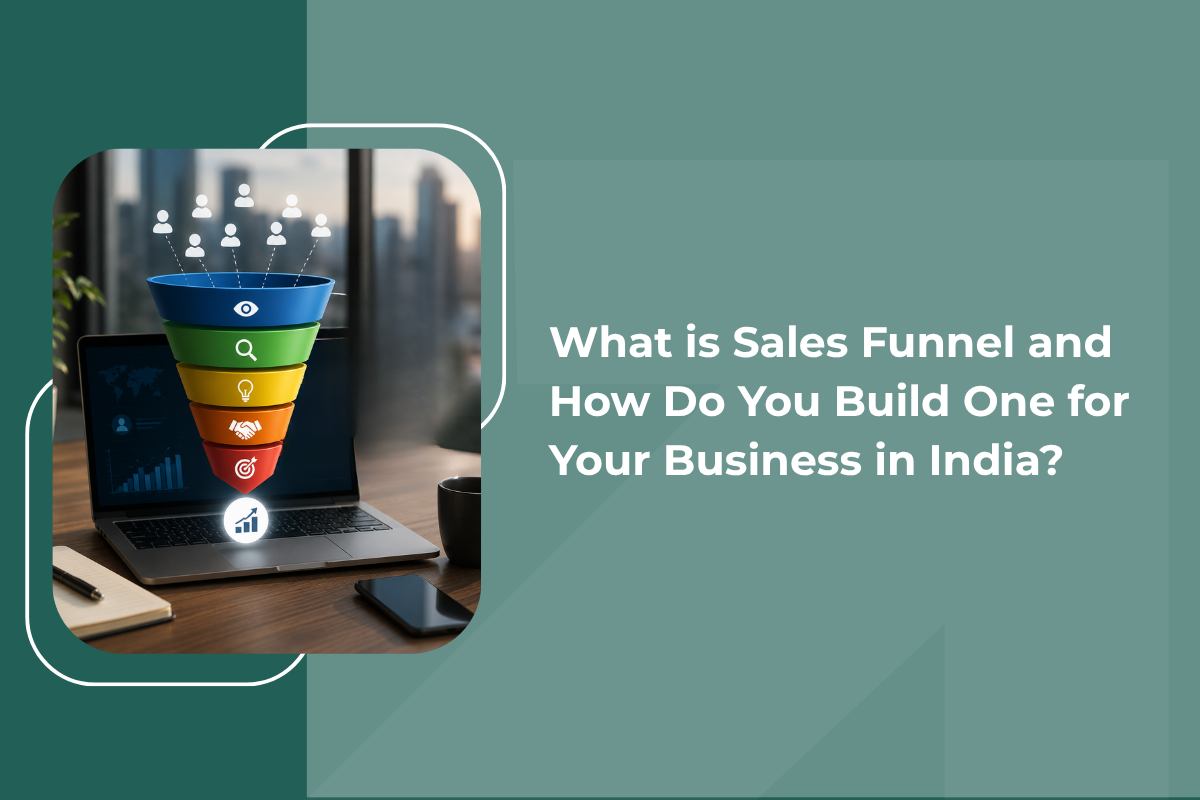
A sales funnel is a visual representation of the stages a potential customer moves through, from first becoming aware of your business to actually making a purchase. it is called a "funnel" because, naturally, more people enter at the top than come out the bottom, not everyone who notices your business ends up buying, and that's expected.
The value of thinking in terms of a funnel is that it breaks a vague goal like "get more sales" into specific, measurable stages, each with its own reason people might drop off, and its own fix.
The Core Stages of a Sales Funnel
1. Awareness - This is the top of the funnel, the moment someone first learns your business exists. This could come from an ad, a social media post, a referral, or a search result. At this stage, the person doesn't know much about you yet, and the goal is simply visibility.
2. Interest - Once aware, some people move into genuine curiosity, they visit your website, follow your page, or ask an initial question. They're evaluating whether your business is relevant to a problem they have.
3. Consideration - Here, the potential customer is actively comparing options. They might be looking at your pricing, reading reviews, or comparing you against competitors. This is often where detailed questions come in, about features, cost, or how you are different.
4. Decision - At this stage, the person is close to making a choice. They may be negotiating, asking about specific terms, or simply deciding between a shortlist of two or three options.
5. Action (Purchase) - The final stage, the person completes the purchase, signs the contract, or converts in whatever way defines "customer" for your business.
6. Retention (often added as a stage beyond the funnel) - While not always included in a traditional funnel, what happens after the sale, repeat purchases, referrals, renewals, matters just as much for long-term business growth.
Why a Sales Funnel Matters
Without a clear funnel, most businesses, including those running on a franchise CRM across multiple locations, only track one number: total sales. This tells you what happened, but nothing about why. A structured funnel changes that by showing you exactly where people are dropping off:
- If lots of people are aware of your business but few show interest, your messaging or targeting may be off
- If people show interest but rarely reach the consideration stage, your initial follow-up or value proposition may need work
- If people reach consideration but rarely decide, pricing, trust signals, or competitive positioning could be the issue
- If people decide but do not complete the action, there may be friction in your checkout, contract, or onboarding process
Each stage gives you a specific, fixable problem instead of a vague "we need more sales" conclusion.
How to Build a Sales Funnel for Your Business: Step by Step
- Step 1: Map your actual customer journey - Before building anything, write down the real steps a customer currently takes, from first hearing about you to making a purchase. do not assume a textbook funnel; observe how your own customers actually behave.
- Step 2: Define what happens at each stage - For each stage, awareness, interest, consideration, decision, action, decide what specific action or signal marks someone as being in that stage. For example, "interest" might mean they've visited your pricing page, while "consideration" might mean they've requested a demo or quote.
- Step 3: Create content and touchpoints for each stage - Different stages need different kinds of content. Awareness-stage content should be broad and attention-grabbing; consideration-stage content should be detailed and comparison-focused; decision-stage content should address hesitations directly, like case studies or guarantees.
- Step 4: Set up tracking for each stage - You can not improve what you do not measure. CRM analytics software makes this tracking automatic, showing how many people enter at the top and how many make it through each subsequent stage, so you can see exactly where the biggest drop-offs happen.
- Step 5: Identify and fix your biggest leak - Rather than trying to improve everything at once, find the stage with the largest drop-off percentage and focus your efforts there first. Small improvements at your weakest stage often produce bigger results than spreading effort evenly across all stages.
- Step 6: Review and refine regularly A funnel is not something you build once and forget. Customer behaviour, competition, and market conditions change, revisiting your funnel every few months keeps it aligned with reality rather than outdated assumptions.
Common Funnel Leaks and How to Fix Them
- High awareness, low interest Often a sign that your messaging is not resonating with the audience you are reaching, or you are targeting the wrong audience altogether. Fix: refine targeting and clarify your core value proposition.
- High interest, low consideration Usually means your initial follow-up is not fast or compelling enough to keep momentum going. Fix: speed up response times and provide clearer next steps.
- High consideration, low decision Frequently a pricing, trust, or differentiation problem. Fix: address common objections directly through testimonials, guarantees, or clearer comparisons.
- High decision, low action - Often a friction problem, a complicated checkout, unclear next steps, or a slow contract process, which is one of the most common leaks in a CRM for ecommerce website funnel specifically.
Turning a Funnel Into a Repeatable Process
A funnel only becomes useful once it is actively tracked rather than just diagrammed once and forgotten. This usually means:
- Assigning each lead or prospect a clear stage at any given time
- Reviewing stage-by-stage numbers regularly, not just total sales at the end of the month
- Making sure every team member, marketing and sales, particularly in a CRM for digital marketing agency managing funnels for multiple clients, understands what defines each stage consistently.
- Treating funnel drop-off points as ongoing problems to solve, not one-time fixes
Over time, this turns the funnel from a one-time exercise into an ongoing system for continuously improving how leads move toward becoming customers.
Final Thoughts
A sales funnel is not just a diagram, it is a practical lens for understanding exactly where potential customers are gained and lost throughout their journey with your business. By breaking the vague goal of "more sales" into specific, trackable stages, you gain the ability to diagnose and fix real problems instead of guessing at solutions.
If you have never mapped your funnel before, start simple: identify your stages, track how many people move through each one, and focus first on fixing your biggest leak.