Summary:
Lead scoring is a crucial process for sales teams to prioritize leads based on their likelihood to convert, using a combination of explicit and implicit factors. This system helps teams focus on high-potential leads, ensuring efficient use of time and resources. By automating lead scoring within a CRM, teams can consistently prioritize and act on the most promising opportunities, enhancing overall sales effectiveness.
Table of Contents
Not every lead deserves the same amount of attention. Some are ready to buy this week; others are simply browsing and may take months to decide, if they ever do. The challenge for most sales teams is not a shortage of leads, it is knowing which ones to chase first. That's exactly the problem lead scoring is designed to solve.
What Is Lead Scoring?
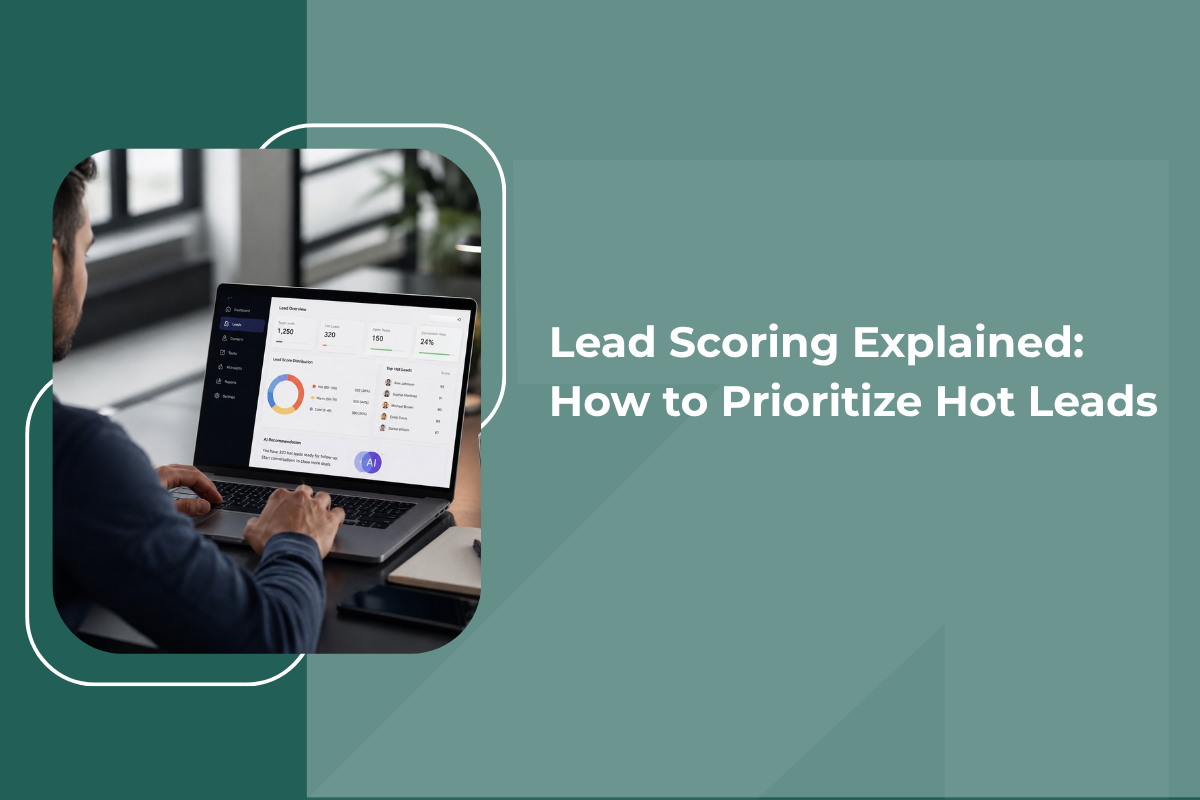
Lead scoring is the process of assigning a value, usually a numeric score, to each lead based on how likely they are to convert. Instead of treating every enquiry the same way, a scored lead tells your team, at a glance, who's worth calling first.
A well-built scoring model within a lead management system takes into account both who the lead is and how they have behaved, then combines these signals into a single, easy-to-read score.
Why Lead Scoring Matters for Growing Teams
When a sales team is small and lead volume is low, it is fairly easy to mentally judge which leads seem serious. But as volume grows, this becomes impossible to do consistently, and that's exactly when good leads start getting the same treatment as low-intent ones.
Lead scoring solves this by making prioritization objective and consistent, regardless of who on the team is looking at the lead list. This has a few direct benefits:
- Salespeople spend their time on leads most likely to close
- Hot leads get faster follow-up instead of sitting in a general queue
- Managers can see, at a glance, where the strongest opportunities are
- Marketing and sales, especially in a CRM for digital marketing agency setup where lead volume is high, can agree on what actually counts as a 'qualified' lead
Explicit vs Implicit Scoring Factors
Most scoring models combine two types of signals:
Explicit factors, information the lead has directly given you:
- Company size or budget range
- Job title or decision-making authority
- Specific product or service they enquired about
- Timeline they have mentioned for making a decision
Implicit factors, behavior that suggests intent, even if unstated:
- How quickly they responded to your outreach
- Number of pages visited on your website
- Whether they opened or clicked a follow-up email
- Whether they have engaged more than once across multiple channels
A strong scoring approach looks at both, someone who fits your ideal customer profile and is actively engaging is a much stronger signal than either factor alone.
Building a Simple Point-Based Scoring Model
You don't need anything complicated to start, even a best CRM for accountants setup can use a simple point system to prioritize high-value clients. A basic point system might look like this:
- Fits target industry or company size
- Requested a demo or pricing information
- Responded within 24 hours of first contact
- Opened multiple follow-up emails
- Hasn't responded in over two weeks
- Explicitly mentioned "not right now"
Once a lead crosses a certain threshold, say, 30 points, it is flagged as hot and pushed to the top of the queue. Leads below a lower threshold can be moved into a slower nurture sequence instead of taking up daily follow-up time.
This kind of simple system, even done manually at first, immediately improves how a team prioritizes its day.
Common Mistakes Teams Make with Lead Scoring
1. Scoring only on demographics - ignoring behaviour A lead that technically fits your target profile but hasn't engaged at all is often less valuable than one that does not perfectly fit but is actively responding and asking questions.
2. Never revisiting the scoring model - What counts as a "hot" signal today might change as your business and customer base evolve. A scoring model set up once and never reviewed tends to lose accuracy over time.
3. Treating every point the same - Not all behaviours carry equal weight. Requesting a demo is a much stronger signal than simply opening an email, and the scoring model should reflect that difference clearly.
4. Scoring leads but not acting on it - A perfectly designed scoring model is useless if the team does not actually prioritize their day around it. The score should directly determine who gets called first.
How a Lead Management System Automates Scoring
Doing this manually works for a while, but it becomes hard to maintain as lead volume grows. This is where sales lead management software takes over the heavy lifting:
- Scores update automatically as new behaviour data comes in
- Hot leads are flagged and surfaced at the top of the queue without manual sorting
- Salespeople see a prioritized list the moment they log in, instead of a flat, unsorted one
- Managers get visibility into scoring trends, which sources produce the highest-scoring leads over time
This connection between scoring and actual daily workflow is what separates a scoring model that exists on paper from one that genuinely changes how a team spends its time. In practice, this is one of the clearest examples of CRM and lead management working together, the score determines priority, and the CRM ensures that priority actually reaches the salesperson's daily task list.
A Practical Starting Point
If you're introducing lead scoring for the first time, start simple:
- Pick three to five signals that matter most for your business
- Assign rough point values based on how strongly each signal predicts conversion
- Test the model against leads you've already converted to see if it would have flagged them correctly
- Adjust the weights based on what you learn
- Automate it once the manual version proves reliable
Final Thoughts
Lead scoring is not about complex algorithms, it is about making sure your team's time goes where it matters most. A simple, well-thought-out scoring model, backed by a system that automates and surfaces it consistently, means hot leads never sit behind cold ones simply because of the order they arrived in.
If your team is still working leads in the order they came in rather than the order they are likely to convert, lead scoring is one of the highest-impact changes you can make to your process.